
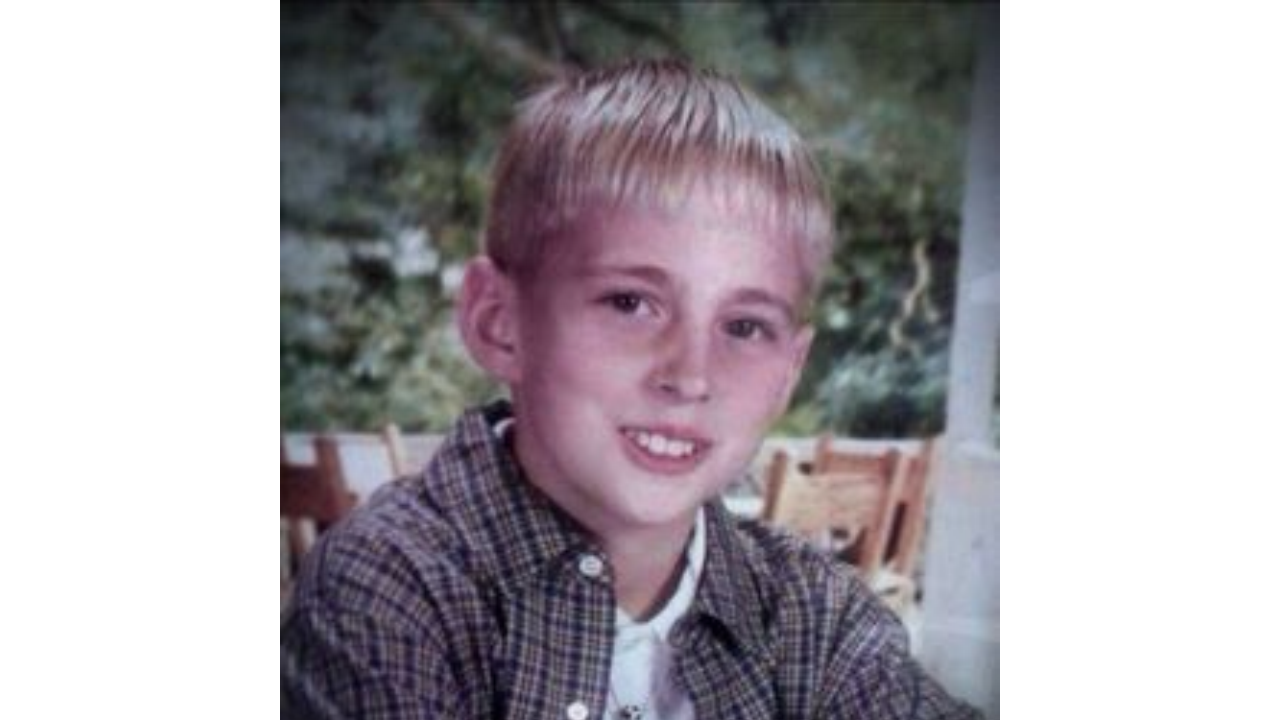
Billy Huddleston was a 12-year-old boy from Oakboro, North Carolina, who disappeared on July 25, 2000, before being found murdered three days later. His disappearance triggered an extensive community search and a criminal investigation that eventually exposed a disturbing deception. A neighbor, Bobby Richard Taylor Jr., had helped search for Billy while concealing his involvement in the child’s death. Taylor later pleaded guilty to the murder and received a life sentence.
Who Was Billy Huddleston?
Billy Huddleston was a young boy living in Oakboro, a small community in Stanly County, North Carolina.
He was just 12 years old when he disappeared during the summer of 2000.
His sudden absence alarmed his family and neighbors, who joined efforts to locate him.
The case attracted significant attention because of Billy’s age, the circumstances surrounding his disappearance and the eventual discovery that someone involved in the search was responsible for his death.
More than two decades later, his story continues to be discussed in accounts of North Carolina criminal investigations.
When Did Billy Disappear?
Billy Huddleston went missing on July 25, 2000.
His disappearance from the Oakboro area prompted an urgent search involving law enforcement officers, local residents and volunteers.
As the search continued, investigators attempted to reconstruct his movements and determine whether he had left voluntarily or encountered someone who intended to harm him.
One early account suggested Billy had entered a vehicle with two unidentified men.
That claim initially appeared to provide investigators with a possible direction for their inquiries.
However, the information would later become an important part of the deception surrounding the case.
The Red Car Story
Bobby Richard Taylor Jr., a neighbor, claimed that he had seen Billy leave his bicycle at Taylor’s house before getting into a red sports car occupied by two men.
The account was misleading and diverted attention toward a supposed vehicle and unidentified individuals.
Investigators initially had to consider information provided by people who claimed to have witnessed Billy’s movements.
Taylor’s statement created the appearance that the boy might have left the neighborhood with strangers.
The significance of the story became clearer as investigators uncovered evidence connecting Taylor himself to the crime.
His attempt to direct suspicion elsewhere became one of the most disturbing aspects of the investigation.
The Search Effort
Residents of Oakboro responded to Billy’s disappearance by helping search for the missing child.
Volunteers distributed information, looked for possible clues and supported the family during the uncertainty.
Remarkably, Taylor participated in the search despite his involvement in Billy’s death.
Contemporary reports described him handing out missing-person fliers and providing coffee to people searching for the boy.
His behavior allowed him to appear concerned while remaining close to the investigation.
The contrast between his public actions and the crime he later admitted committing became a defining feature of the case.
Where Was Billy Found?
Billy Huddleston’s body was discovered on July 28, 2000, in a cornfield just inside Union County, North Carolina.
The discovery came three days after his disappearance and ended hopes that he would be found alive.
The location was outside his home community but within the surrounding region.
Finding his body transformed the investigation from a missing-child search into a homicide case.
Law enforcement officers then focused on establishing what had happened, identifying the person responsible and examining evidence connected to Billy’s final movements.
The discovery devastated the community that had spent days searching for him.
Who Was Bobby Taylor?
Bobby Richard Taylor Jr. was a neighbor who became a central figure in the investigation.
Authorities discovered that he had been using the name Jay Kenney, an alias that helped conceal his identity.
Taylor was also wanted by authorities in Virginia in connection with earlier violent offenses.
His background and use of a false identity added another dimension to the investigation.
Rather than being an ordinary neighbor assisting with the search, Taylor was a fugitive whose true circumstances were not initially apparent to those around him.
His efforts to appear helpful made the eventual revelations particularly shocking.
How Was He Caught?
A major breakthrough occurred approximately four days after Billy’s body was discovered.
According to contemporary reporting, a North Carolina State Bureau of Investigation agent visited Taylor’s residence and noticed a strong odor associated with decomposition.
That observation became an important development in the investigation.
Authorities increasingly focused their attention on Taylor and his possible connection to Billy’s death.
The investigation ultimately led to his arrest.
The case demonstrated how physical observations, investigative follow-up and the examination of suspicious statements can help uncover evidence that contradicts a suspect’s account.
Guilty Plea and Sentence
Bobby Richard Taylor Jr. subsequently pleaded guilty to murdering Billy Huddleston and received a life sentence.
His guilty plea established criminal responsibility for the child’s death.
The outcome brought a legal resolution to a case that had begun with uncertainty and an extensive search.
However, a conviction could not undo the loss experienced by Billy’s family.
Taylor’s actions during the search remained especially troubling because he had presented himself as someone trying to help locate the missing boy.
His conviction confirmed that the person responsible had been much closer to the investigation than many residents initially realised.
Documentary Coverage
The Billy Huddleston case has also received attention through true-crime programming.
It was featured in an episode of Evil Lurks titled “Never Say Goodbye”, which revisited the disappearance and subsequent murder investigation.
Documentary coverage has helped introduce the case to audiences unfamiliar with the events in Oakboro.
The story remains notable for the misleading witness account, the suspect’s participation in the search and the discovery of his concealed identity.
Such programmes also demonstrate why careful reporting matters when revisiting crimes involving children and grieving families.
Where the Case Stands
Billy Huddleston is not a currently missing person. His remains were recovered in July 2000, and Bobby Richard Taylor Jr. later pleaded guilty to his murder.
The case is therefore a historical homicide rather than an unresolved disappearance.
Its lasting significance lies in the circumstances surrounding the investigation and the extraordinary deception carried out by the person responsible.
For Oakboro residents, the tragedy represented the loss of a child whose disappearance had united the community in an urgent search.
Billy Huddleston was only 12 when his life ended in July 2000. His story continues to be remembered as a heartbreaking North Carolina murder case in which a neighbor who appeared to be helping search for a missing child was ultimately held responsible for his death.