
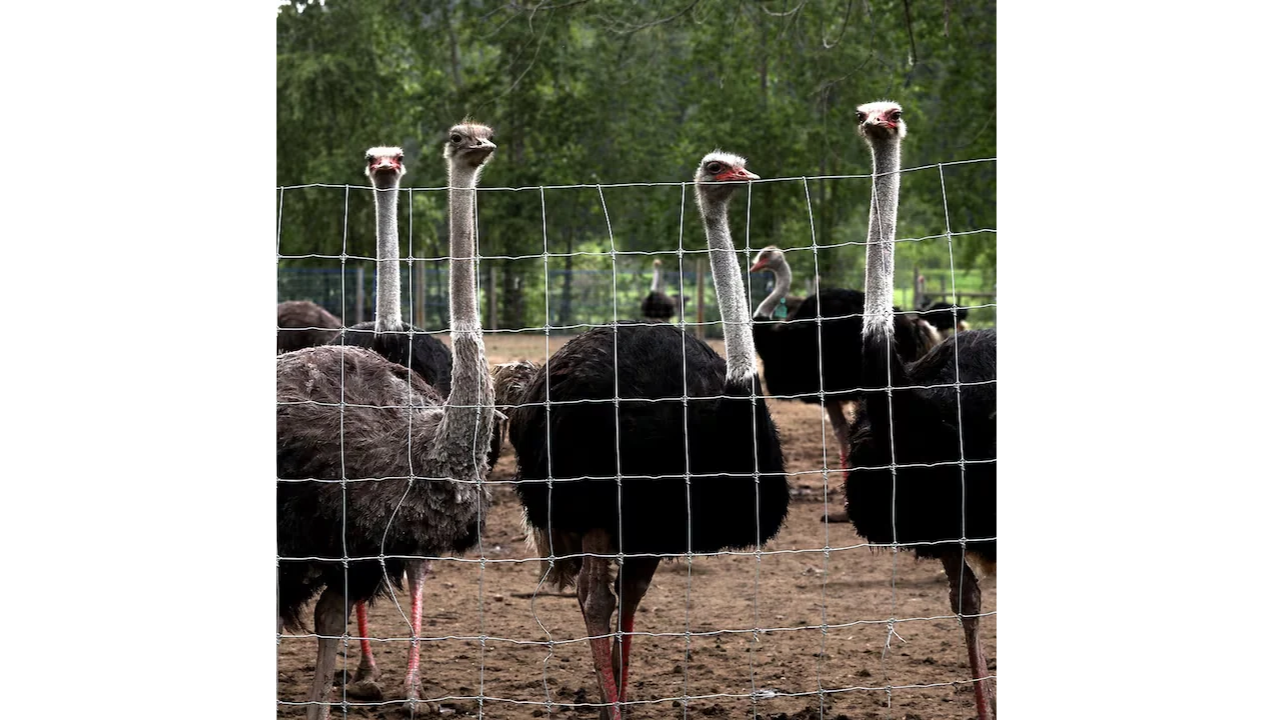
Universal Ostrich Farms in Edgewood, British Columbia, has filed a multimillion-dollar lawsuit against the Canadian Food Inspection Agency (CFIA), the federal government, and the B.C. RCMP, alleging that 37 ostriches remain unaccounted for following a controversial government-ordered cull. The owners claim officials acknowledged destroying only 314 birds despite an alleged flock of 351. The lawsuit also seeks compensation over seized ostrich eggs, lost business opportunities, and alleged misconduct during the operation.
What Happened?
The legal dispute involves Universal Ostrich Farms, a property in Edgewood, British Columbia, that became the center of a national controversy over avian influenza controls.
Following an H5N1 bird flu outbreak, federal authorities ordered the destruction of the farm’s remaining ostriches.
The owners challenged the decision through several courts but were ultimately unsuccessful in stopping the operation.
Now, a new civil lawsuit questions how the cull was conducted, how many birds were accounted for, and whether the government adequately compensated the business.
The allegations have not yet been proven in court.
37 Missing Ostriches
One of the lawsuit’s central allegations concerns 37 ostriches that the farm owners say are missing from official records.
According to the claim, there were 351 ostriches on the property when federal authorities executed their warrants.
However, the CFIA reportedly offered compensation for only 314 birds.
That creates a difference of 37 ostriches.
The plaintiffs argue that authorities have not provided an adequate explanation for the discrepancy.
Importantly, the difference in the reported counts does not independently establish what happened to those birds.
The issue remains an allegation requiring evidence and judicial examination.
Who Filed the Lawsuit?
The legal action was brought by the farm’s owners, Karen Espersen and Dave Bilinski, alongside property owner Landco Ventures.
The defendants include the Canadian Food Inspection Agency, the federal government, and the British Columbia RCMP.
The plaintiffs are seeking financial damages arising from the destruction of the flock and the government’s actions on the property.
Their claim extends beyond the birds themselves.
It includes alleged losses involving research materials, commercial opportunities, and property rights.
The exact amount ultimately recoverable, if any, will depend on the legal proceedings.
$200 Million Business Claim
A major part of the lawsuit concerns a proposed business involving ostrich-derived dietary supplements.
The farm claims it was developing a dietary supplement and pill product using materials connected to its ostrich operation.
According to the plaintiffs, the business was approaching a commercial launch.
They estimate that the venture could have generated approximately $200 million in revenue.
However, that amount represents a projected commercial opportunity, not verified earnings or an established company valuation.
Whether the business could realistically have achieved those revenues is among the questions that may require supporting evidence.
Seized Ostrich Eggs
The plaintiffs also allege that the CFIA seized approximately 1,200 ostrich eggs and failed to return them.
They claim the eggs were important to their planned research and commercial development.
According to the lawsuit, losing access to these materials disrupted their ability to move forward with the proposed supplement business.
The farm argues that the financial consequences were substantially greater than the value of the eggs alone.
The legal proceedings will need to examine the circumstances of the seizure, the applicable regulatory authority, and any demonstrable financial losses.
Compensation Dispute
The government reportedly offered approximately $942,000 in compensation for 314 ostriches.
That works out to roughly $3,000 per bird.
The owners rejected the amount, arguing that it failed to reflect the flock’s actual value.
They contend that the birds were connected to research and commercial projects rather than functioning solely as ordinary agricultural livestock.
The dispute therefore involves competing views of how the ostriches should be valued.
The government’s compensation framework and the plaintiffs’ claimed business losses may be examined separately during the litigation.
Alleged Trespass
Another significant allegation concerns the presence of government personnel on the farm.
The plaintiffs claim federal authorities and police occupied the property for 52 days without proper legal or statutory authority.
They describe the prolonged presence as trespass.
However, the defendants’ legal powers and the circumstances under which officials entered or remained on the property will be important issues.
Government agencies may have specific enforcement powers under animal-health legislation.
The court will need to determine whether those powers were exercised lawfully in this case.
Animal Cruelty Claims
The lawsuit also contains allegations involving the treatment of ostriches during quarantine and the eventual cull.
The plaintiffs accuse the CFIA and RCMP of actions amounting to animal cruelty.
These allegations concern the management of the birds and the circumstances surrounding the destruction operation.
The claims are serious, but they remain untested.
No judicial finding establishing animal cruelty by the named defendants has been identified in the information provided.
The lawsuit gives the farm an opportunity to present evidence supporting its position.
The defendants will also have an opportunity to respond.
Bird Flu Outbreak
The dispute began after an outbreak of highly pathogenic avian influenza H5N1 affected the farm.
Approximately 70 ostriches reportedly died between December 2024 and January 2025.
The CFIA subsequently ordered the remaining flock destroyed under its disease-control measures.
Authorities use such measures to reduce the risk of dangerous animal diseases spreading between farms and potentially affecting wider agricultural operations.
The farm’s owners opposed the order.
They argued that surviving ostriches had developed immunity and should not be treated under the same policies applied to conventional commercial poultry.
Ten-Month Legal Battle
The owners pursued an extended legal campaign to prevent the cull.
Their challenge lasted approximately ten months and reached the Supreme Court of Canada.
They argued that the surviving ostriches presented circumstances requiring a different approach from standard disease-control procedures.
The courts ultimately did not prevent the CFIA from proceeding.
After the legal challenges ended, the government carried out the destruction operation.
The new lawsuit does not change the outcome of those earlier proceedings.
Instead, it raises separate questions about compensation, property rights, missing birds, and alleged misconduct.
Why the Case Matters
The lawsuit raises questions about the balance between government disease-control powers and the rights of agricultural businesses.
Animal-health authorities must respond to outbreaks that could threaten livestock industries and public health.
Farm operators, meanwhile, may argue that enforcement actions cause disproportionate economic losses.
The Universal Ostrich Farms dispute also involves disagreements over how unusual agricultural assets should be valued.
The alleged difference between the farm’s bird count and the government’s compensation count adds another contested issue.
The outcome could attract attention from farmers, regulators, and animal-welfare advocates.
Latest Update
As of November 4, 2026, Universal Ostrich Farms has filed its civil claim in the B.C. Supreme Court.
The lawsuit seeks damages connected to the cull, the alleged 37 unaccounted-for birds, and the claimed loss of a proposed supplement business.
The plaintiffs also allege unauthorized occupation of their property and mistreatment of animals.
None of these allegations has yet been established through a final court ruling.
The defendants’ formal legal responses and any future hearings will be important in determining how the dispute progresses.
Final Word
The BC ostrich farm missing birds lawsuit centers on a disputed count of 351 ostriches, compensation for 314, and allegations that 37 birds remain unexplained.
Universal Ostrich Farms is also pursuing damages over 1,200 allegedly seized eggs and a proposed business projected to generate $200 million in revenue.
The case follows a lengthy battle over an H5N1-related cull that federal authorities ultimately carried out.
For now, the lawsuit represents the farm owners’ allegations, not proven findings against the CFIA, Canadian government, or RCMP.
Tighten the article to 800 wordsMake the opening more Discover-friendly