
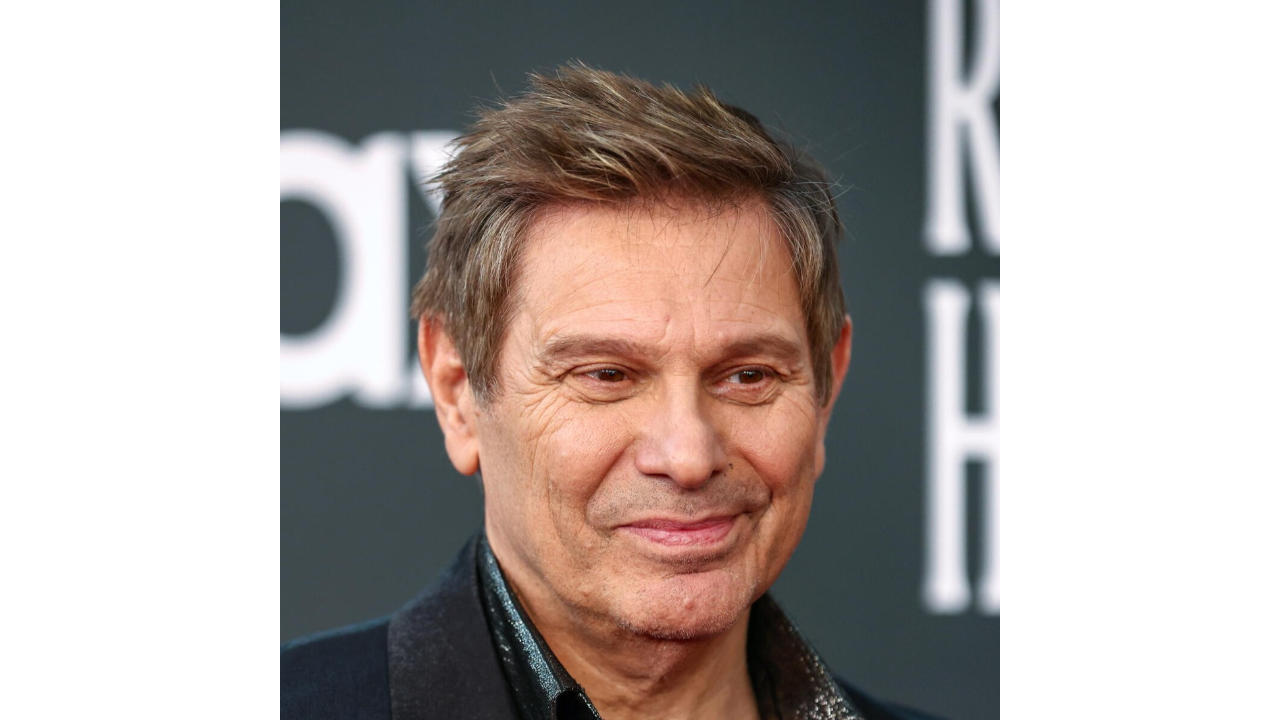
Roger Taylor, the longtime drummer of British new wave band Duran Duran, announced his retirement on November 12, 2026, at the age of 66 after worsening tinnitus affected his hearing. The musician, whose distinctive drumming helped shape some of the band’s biggest hits, decided to step away following medical advice. His departure marks the end of an important chapter for the legendary group, which rose to international fame during the 1980s.
Why Did Roger Taylor Leave?
Roger Taylor retired from Duran Duran because of worsening tinnitus, a hearing condition that causes ringing, buzzing, or other sounds without an external source.
According to the band’s official announcement on November 12, 2026, Taylor’s condition had deteriorated, making continued drumming a concern for his long-term hearing health.
After consulting medical professionals, he decided that leaving the band and retiring from playing drums was the appropriate decision.
His announcement came after decades of performing in loud concert environments and recording music.
Although Taylor had previously taken an extended break from Duran Duran, his latest departure was specifically connected to his health.
Retirement Announcement
Taylor confirmed his decision through a statement published on Duran Duran’s official website.
The drummer reflected positively on his final years with the band, describing his departure as an opportunity to finish his performing career on a high note.
He highlighted memorable achievements, including the group’s recent UK and European performances, a major appearance at BST Hyde Park, and its induction into the Rock & Roll Hall of Fame.
Taylor also recalled working with renowned musician and producer Nile Rodgers, whose creative relationship with Duran Duran stretches back decades.
His retirement announcement attracted attention from music fans who had followed the group since its breakthrough years.
Bandmates React
Duran Duran members Simon Le Bon, Nick Rhodes, and John Taylor publicly acknowledged Roger Taylor’s contribution following his announcement.
The musicians described him as their brother and emphasized his importance to the band’s musical identity.
His precise drumming, ability to combine rock and dance rhythms, and steady presence had been central to Duran Duran’s recordings and live performances.
The band’s response reflected a friendship that extended well beyond their professional collaboration.
Taylor had experienced both the group’s earliest international success and its later revival, making his departure particularly significant for the remaining members.
Who Is Roger Taylor?
Roger Andrew Taylor was born on April 26, 1960, in Birmingham, England. He developed an interest in music during his younger years and eventually became a professional drummer.
He joined Duran Duran in 1979, when the group was developing its distinctive combination of new wave, pop, rock, and dance music.
His playing became an essential part of the band’s early sound.
Alongside Simon Le Bon, Nick Rhodes, John Taylor, and Andy Taylor, he formed the lineup popularly known as the Fab Five.
The group quickly became one of the defining British acts of the 1980s, combining memorable songs with fashionable visuals and innovative music videos.
Biggest Songs
Roger Taylor performed on several of Duran Duran’s most recognizable recordings.
His early work appeared on the albums Duran Duran (1981), Rio (1982), and Seven and the Ragged Tiger (1983).
These releases helped establish the band as a major international act.
Songs such as Hungry Like the Wolf, Rio, The Reflex, and A View to a Kill demonstrated the group’s ability to combine catchy melodies with energetic rhythms.
Taylor’s drumming provided a strong foundation for the band’s bass lines, synthesizers, and guitar arrangements.
His controlled approach helped create the danceable sound that distinguished Duran Duran from many contemporary rock groups.
First Departure in 1985
Roger Taylor’s retirement in 2026 was not his first departure from Duran Duran.
He originally stepped away in 1985, following the intense demands of international touring and the pressures associated with worldwide fame.
The group’s appearance at Live Aid in July 1985 became one of the final major performances of its original lineup before the musicians pursued separate projects.
Taylor also participated in Arcadia, a musical project involving Simon Le Bon and Nick Rhodes.
Arcadia released the album So Red the Rose in 1985.
After withdrawing from the music industry, Taylor spent much of his time living privately in Gloucestershire, away from the constant attention surrounding Duran Duran.
Return to Duran Duran
Taylor reunited with Duran Duran in 2001, joining the other original members as the group prepared for a major comeback.
The reunion led to renewed international interest and the release of Astronaut in 2004.
The album introduced the reunited lineup to another generation of listeners.
Taylor continued performing and recording with the band during the following two decades.
His later work included albums such as All You Need Is Now, Paper Gods, Future Past, and Danse Macabre.
The group’s continued activity demonstrated its ability to adapt while retaining the musical characteristics that made it successful.
Rock Hall Recognition
One of the most significant moments in Taylor’s later career came in 2022, when Duran Duran was inducted into the Rock & Roll Hall of Fame.
The recognition celebrated the band’s influence on popular music, music videos, and the development of new wave.
For Taylor, the honor acknowledged decades of contributions to recordings that had become familiar to audiences worldwide.
The induction also represented a major achievement for a group whose influence extended beyond its original 1980s popularity.
Roger Taylor’s Legacy
Roger Taylor’s importance to Duran Duran goes beyond his technical ability as a drummer.
His playing helped connect the band’s electronic arrangements with traditional live instrumentation, creating rhythms that worked equally well on records and concert stages.
Unlike drummers known primarily for elaborate solos, Taylor frequently emphasized timing, consistency, and supporting the overall song.
His musical partnership with bassist John Taylor became a particularly recognizable element of the group’s sound.
His retirement at 66 ends a long association with Duran Duran, but his performances remain preserved across the band’s recordings and concert history.