
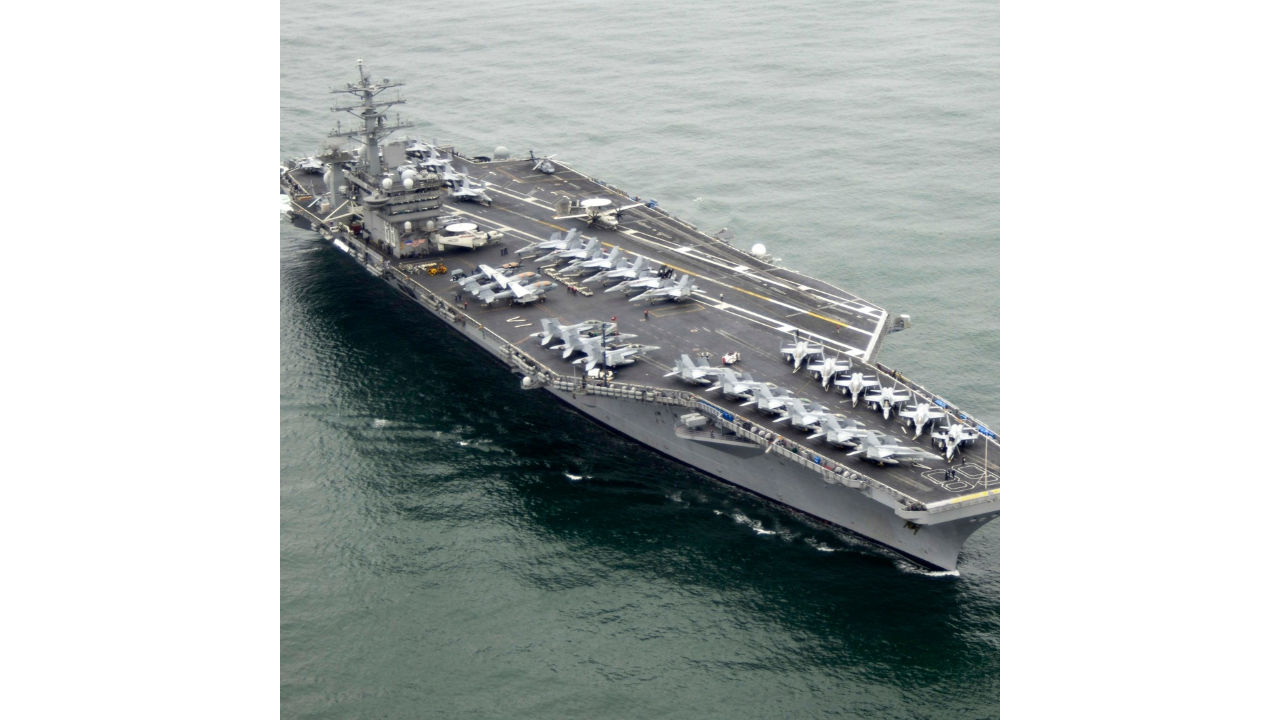
USS Nimitz (CVN-68) is a nuclear-powered aircraft carrier of the United States Navy and the first ship of the Nimitz class. Commissioned on May 3, 1975, the massive warship has served the American fleet for more than 51 years. Named after World War II naval commander Fleet Admiral Chester W. Nimitz, the carrier has participated in major military operations, supported international security missions, and achieved important naval aviation milestones. As of 2026, USS Nimitz remains one of the world’s most historically significant aircraft carriers, with retirement preparations underway ahead of its planned withdrawal from active service in 2027.
USS Nimitz Wiki
| Details | Information |
|---|---|
| Official Name | USS Nimitz |
| Hull Number | CVN-68 |
| Country | United States |
| Operator | United States Navy |
| Ship Type | Nuclear-Powered Aircraft Carrier |
| Class | Nimitz Class |
| Named After | Fleet Admiral Chester W. Nimitz |
| Builder | Newport News Shipbuilding |
| Keel Laid | June 22, 1968 |
| Launched | May 13, 1972 |
| Commissioned | May 3, 1975 |
| Length | 1,092 feet |
| Maximum Speed | More than 30 knots |
| Propulsion | Two A4W Nuclear Reactors |
| Personnel | Approximately 5,000 with Air Wing |
| Homeport | Naval Station Norfolk, Virginia |
| Planned Retirement | 2027 |
| Motto | Teamwork, a Tradition |
Ship Background
USS Nimitz was developed during an important period of American naval modernization. The United States needed aircraft carriers capable of operating across distant oceans while supporting increasingly advanced military aircraft.
Unlike conventional carriers dependent on large quantities of propulsion fuel, Nimitz was designed around nuclear reactors.
This technology allowed the vessel to travel long distances without frequent refueling for propulsion.
The ship became the foundation of the Nimitz-class aircraft carrier program, which eventually produced ten nuclear-powered supercarriers.
Its design influenced American naval operations for decades.
Name Origin
The aircraft carrier honors Fleet Admiral Chester William Nimitz, one of the most influential American naval leaders of World War II.
Nimitz commanded the United States Pacific Fleet during the conflict and played a central role in directing naval operations against Japan.
His leadership was particularly important during the Battle of Midway in June 1942.
Naming the carrier after him recognized his contributions to American naval history.
The ship continues to carry his legacy through its operational traditions and long record of service.
Construction
Construction of USS Nimitz began at Newport News Shipbuilding in Virginia.
Its keel was laid on June 22, 1968, beginning a complex engineering project involving nuclear propulsion systems, aviation facilities, and advanced naval equipment.
The carrier was launched on May 13, 1972, before undergoing additional construction and testing.
On May 3, 1975, the vessel officially entered United States Navy service.
President Gerald R. Ford attended the commissioning ceremony, marking the beginning of a new generation of American aircraft carriers.
Size and Design
USS Nimitz ranks among the largest warships ever constructed.
The carrier measures approximately 1,092 feet (333 meters) long, providing enough deck space for launching, recovering, and maintaining military aircraft.
Its full-load displacement is approximately 100,000 long tons, although the precise figure varies with equipment and operational loading.
The flight deck measures approximately 252 feet across at its widest point.
Below the flight deck, large hangar spaces accommodate aircraft maintenance and storage.
The ship also contains medical facilities, living quarters, kitchens, workshops, and operational command centers.
These facilities allow thousands of personnel to live and work aboard during extended deployments.
Nuclear Power
USS Nimitz operates using two Westinghouse A4W nuclear reactors.
These reactors generate steam that powers the ship’s propulsion machinery and supports essential onboard systems.
The carrier uses four propeller shafts and can exceed 30 knots, equivalent to approximately 56 kilometers per hour.
Nuclear propulsion provides considerable operational endurance, although the ship still requires supplies, aircraft fuel, food, and maintenance support.
Its reactor systems underwent major servicing during a comprehensive overhaul between 1998 and 2001.
That modernization helped prepare the carrier for decades of additional service.
Aircraft Capacity
The primary mission of USS Nimitz is to support military aviation at sea.
The carrier can accommodate an air wing containing dozens of aircraft, with its design supporting configurations of up to approximately 90 aircraft and helicopters.
Its operational aircraft have included F/A-18 fighter jets, electronic warfare aircraft, surveillance platforms, and helicopters.
The ship uses steam-powered catapults to launch fixed-wing aircraft.
Aircraft returning to the carrier are recovered using arresting cables that rapidly reduce their landing speed.
These systems enable aviation operations far from conventional land-based airfields.
Military Operations
USS Nimitz has participated in major American naval missions across several decades.
In 1980, aircraft associated with the carrier supported Operation Evening Light, the attempted rescue of American hostages held in Iran.
During the late 1980s, the ship contributed to naval security operations in the Persian Gulf region.
Its service history also includes deployments connected with Operation Desert Storm, Operation Southern Watch, and Operation Iraqi Freedom.
Beyond combat operations, Nimitz has supported maritime security, military exercises, and international cooperation.
Its deployments have taken it across the Pacific Ocean, Indian Ocean, Mediterranean Sea, and Middle Eastern waters.
Aviation Records
USS Nimitz has achieved several milestones in American carrier aviation.
In November 2014, the carrier hosted the first arrested landing of the Navy’s F-35C Lightning II stealth fighter aboard an aircraft carrier.
This event represented an important step in integrating fifth-generation fighter aircraft into naval operations.
In 2023, Nimitz recorded its 350,000th arrested aircraft landing, demonstrating the extraordinary scale of its aviation history.
These achievements reflect the work of generations of pilots, engineers, deck crews, and maintenance personnel.
Crew Life
Operating a nuclear-powered supercarrier requires a large and highly trained workforce.
USS Nimitz can carry approximately 5,000 personnel, including its ship’s company and embarked air wing.
Crew members perform specialized responsibilities involving aviation, engineering, navigation, communications, security, and medical care.
Life aboard the carrier follows demanding schedules, particularly during flight operations.
Personnel work in coordinated teams to maintain aircraft readiness and ensure safe operations.
The ship’s motto, “Teamwork, a Tradition,” reflects the cooperation required to operate such a complex vessel.
Retirement Plans
USS Nimitz returned to Naval Station Norfolk in July 2026, following its final major deployment activities and transit around South America.
The return marked an important stage in the carrier’s transition toward retirement.
The Navy extended the ship’s service life beyond its earlier planned retirement date to help maintain operational aircraft carrier availability.
As of November 2026, its planned decommissioning timeline extends into 2027, with March 2027 identified in reporting on the service-life extension.
Retiring a nuclear-powered aircraft carrier involves extensive preparation, including removing equipment, managing hazardous materials, and eventually defueling its reactors.
The process is considerably more complicated than retiring a conventionally powered warship.
Historic Legacy
USS Nimitz represents more than five decades of American naval aviation history.
From its commissioning in 1975 to its final years of active service, the carrier has supported military operations, international deployments, and technological developments.
Its longevity also demonstrates the durability of the Nimitz-class design.
The ship has served through major changes in aircraft technology, naval strategy, and global security conditions.
Its operational experience has influenced subsequent generations of American aircraft carriers.
Final Thoughts
USS Nimitz (CVN-68) remains one of the most important aircraft carriers in United States Navy history. With over 51 years of service by 2026, the nuclear-powered supercarrier has participated in significant military missions and supported hundreds of thousands of aircraft landings.
Its planned retirement in 2027 will close a remarkable chapter in American naval history. The ship’s influence, however, will continue through the sailors, aviators, and naval technologies shaped by its decades of service.