
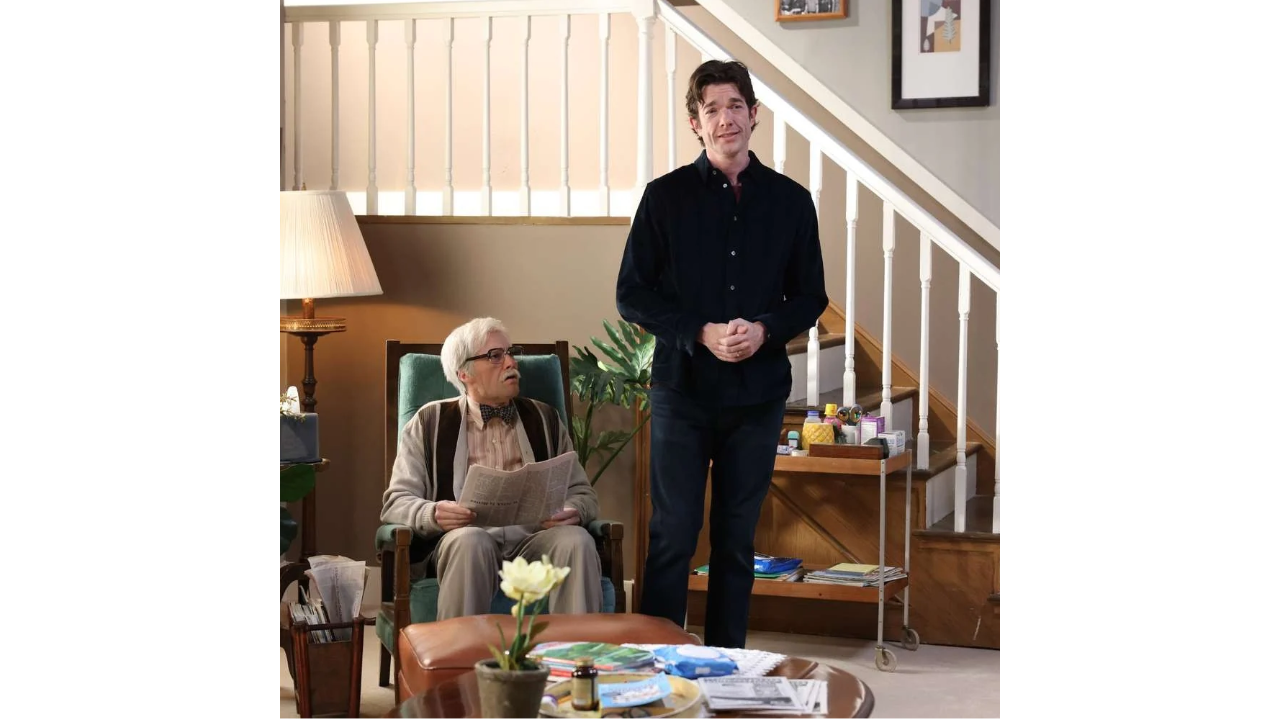
The viral Saturday Night Live skit about aging parents is called “Sister,” a comedy sketch that aired in November 2026 during an episode hosted by John Mulaney. The fake advertisement introduces a supposedly free, round-the-clock elder care service that turns out to be a family’s actual sister. Featuring John Mulaney, Kenan Thompson, Andrew Dismukes, Mikey Day, and Jane Wickline, the sketch has attracted widespread attention for exposing an uncomfortable family reality: daughters often shoulder much of the responsibility for caring for elderly parents while their brothers contribute less.
What Is the SNL Skit?
“Sister” is a Saturday Night Live parody advertisement about the unequal distribution of caregiving responsibilities within families.
The sketch presents an apparently convenient solution for adults struggling to arrange care for aging parents.
Instead of paying for professional caregivers or considering an assisted living facility, the advertisement introduces a service called Sister.
The joke is that Sister is not a company, medical professional, or government program.
She is simply a female family member expected to abandon her own responsibilities and care for an elderly parent.
The exaggerated presentation makes the situation funny while highlighting a serious social issue.
When Did It Air?
The sketch circulated widely in November 2026, following its appearance during an episode hosted by John Mulaney.
Online accounts identify November 15 as its broadcast date, although the episode’s precise scheduling details should be checked against official NBC listings.
The segment quickly gained attention beyond the show’s usual comedy audience.
Caregivers, adult children, and people dealing with elderly relatives began sharing it online.
Its popularity grew because the fictional situation closely resembled experiences described by real families.
The Main Joke
The central joke is that brothers can obtain free elder care simply by contacting their sister.
John Mulaney, Kenan Thompson, and Andrew Dismukes portray men who are reluctant to take on caregiving responsibilities themselves.
The advertisement suggests that complicated arrangements can be avoided with one short message.
When a parent experiences a problem, the brother only needs to alert his sister.
She then becomes responsible for handling everything.
The sketch exaggerates this familiar family pattern by presenting it as a professional service with unlimited availability.
Its humor comes from treating an unfair expectation as an ordinary consumer convenience.
Jane Wickline’s Role
Jane Wickline portrays Sister, the woman expected to manage nearly every aspect of an aging parent’s care.
Her character is presented as endlessly available, regardless of her own employment, housing, or personal commitments.
The advertisement suggests that she might quit her job, end her lease, and relocate across the country.
Once she arrives, her responsibilities extend far beyond keeping an elderly parent company.
She must coordinate appointments, handle insurance questions, manage practical problems, and respond to emergencies.
The character represents the invisible work that family caregivers frequently perform without payment or recognition.
Mikey Day’s Doctor
Mikey Day appears as a doctor explaining why Sister accepts so much responsibility.
His character offers a satirical explanation involving years of social expectations about women’s roles.
The scene suggests that daughters are often conditioned to believe caregiving is naturally their responsibility.
Rather than presenting this arrangement as fair, the sketch makes the assumption itself the target of the joke.
The doctor’s clinical delivery strengthens the parody by making a social problem sound like a medical explanation.
This moment became one of the sketch’s most discussed elements because it directly addresses gender expectations within families.
The Insurance Joke
Another memorable sequence focuses on the administrative work involved in elder care.
Sister is expected to spend hours dealing with insurance companies and complicated telephone systems.
The sketch shows how caregiving includes much more than providing physical assistance.
Family caregivers often organize medical appointments, communicate with doctors, review paperwork, and resolve billing problems.
These responsibilities can consume significant time even when the parent does not require constant physical supervision.
By highlighting frustrating insurance calls, the comedy draws attention to tasks that are rarely visible to relatives who are not directly involved.
The Inheritance Twist
One of the sketch’s sharpest jokes concerns the division of inheritance.
Despite Sister doing nearly all the caregiving work, her brother still expects to receive an equal share of the family’s estate.
The contrast exposes the difference between financial equality and the unequal distribution of time and effort.
A sibling may contribute years of unpaid labor while another remains largely uninvolved.
Yet those differences are not necessarily reflected in later family financial decisions.
The sketch does not offer a legal argument about inheritance.
Instead, it uses the situation to question whether families recognize the value of unpaid care.
The Therapist Disclaimer
The advertisement ends with another pointed joke.
Its fictional service becomes unavailable if Sister has a good therapist.
The implication is that a woman who learns to establish boundaries may stop automatically accepting every family obligation.
The joke connects caregiving expectations with emotional pressure and guilt.
Some adult children feel unable to refuse requests because they fear disappointing relatives or being viewed as selfish.
The disclaimer suggests that healthier boundaries could disrupt an arrangement that depends on one person’s willingness to sacrifice.
It is a brief moment, but it reinforces the sketch’s broader message.
Why It Went Viral
The “Sister” sketch resonated with viewers who recognized their own family experiences in the comedy.
Women shared reactions describing themselves as the person who organizes medical appointments, checks on elderly relatives, and responds to emergencies.
Many identified with the expectation that daughters should automatically become caregivers.
The sketch also prompted discussion among people who had not previously considered how family responsibilities were divided.
Its popularity extended into caregiver communities because it gave a recognizable name to a familiar pattern.
The humor allowed audiences to discuss a difficult subject without ignoring its emotional consequences.
Who Wrote the Sketch?
Saturday Night Live writer Streeter Seidell was among the writers credited with developing the sketch.
Reports indicate that he dedicated the piece to his own sister.
That personal connection helped explain why the comedy captured everyday caregiving details so effectively.
Rather than focusing only on broad stereotypes, the sketch included specific frustrations involving employment, relocation, medical administration, and family expectations.
Those details made the fictional advertisement recognizable to people managing real elder care responsibilities.
The result was a comedy segment that encouraged discussion well beyond its original broadcast.
The Real Caregiving Gap
Research discussed by major news outlets indicates that women account for roughly 60% of family caregivers, although estimates vary by study and population.
Studies have also found that daughters often spend substantially more time caring for aging parents than sons.
Some research suggests daughters provide more than twice as many caregiving hours per month.
These differences can affect employment, retirement savings, personal relationships, and mental well-being.
Men also provide substantial family care, and responsibilities vary widely between households.
Nevertheless, the overall gender imbalance helps explain why the sketch connected with so many viewers.
What Families Can Learn
Although “Sister” is a comedy sketch, its central issue has practical implications.
Caring for aging parents should involve clear discussions about responsibilities, finances, and available support.
Families can divide tasks according to availability, location, ability, and resources rather than automatically assigning everything to one person.
One sibling might coordinate medical appointments while another handles transportation, paperwork, or financial contributions.
Professional caregiving services may also help when family members cannot meet every need themselves.
Recognizing unpaid labor is an important part of making these arrangements fairer.
Why the Sketch Matters
The SNL aging parents skit became popular because it turned a common family imbalance into a memorable comedy premise.
Its fictional Sister provides unlimited care while other relatives enjoy the convenience of avoiding responsibility.
Behind the jokes lies a serious question about how families value the time and effort required to support elderly parents.
For readers searching “SNL skit aging parents,” the sketch is “Sister,” featuring John Mulaney and several Saturday Night Live cast members.
Its lasting appeal comes from the way it combines humor with a recognizable reality of modern family caregiving.