
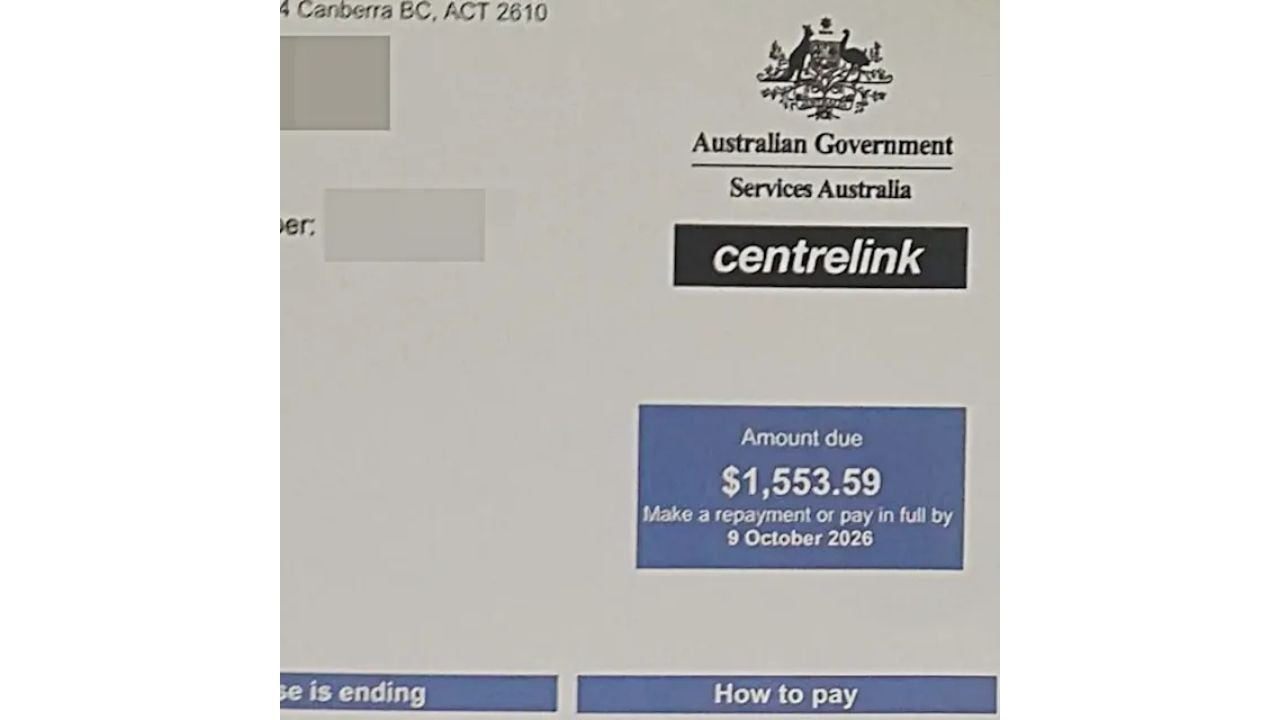
Nearly 147,000 Australians are facing renewed Centrelink debt repayment demands after the federal government restarted the recovery of debts that had been suspended for years over legal concerns.
The debts were calculated using a controversial process known as income apportionment, which was used for decades before being discontinued in 2020. The method has attracted criticism because it could produce incorrect debt amounts by spreading employment income across Centrelink reporting periods.
The latest repayment notices have raised concerns among welfare recipients, particularly those being asked to explain payments received more than a decade ago.
According to information reported on October 26, 2026, the historical income-apportionment process was associated with approximately $4.4 billion in debts over two decades.
Why Debts Returned
Centrelink began suspending some debt recovery activities in 2020, initially during the COVID-19 pandemic. Legal questions surrounding income apportionment subsequently contributed to a longer pause.
Although many affected Australians had already repaid their debts, approximately 147,000 recipients still had outstanding amounts when the government moved to restart recovery.
Services Australia began sending repayment notices in June 2026, informing affected individuals that their previously suspended obligations were being reactivated.
Recipients were given four weeks to establish a repayment arrangement, creating renewed financial pressure for some households.
Services Australia maintains that these are existing debts rather than newly identified overpayments.
What Went Wrong?
Income apportionment was used by Centrelink from the early 1990s until December 2020 to calculate employment earnings when payment dates did not align neatly with welfare reporting periods.
Instead of always relying on income attributed to the correct reporting fortnight, the system could distribute earnings evenly across multiple periods.
This approach created the possibility that income would be counted in a fortnight to which it did not properly belong.
For people working irregular hours, casual shifts or multiple jobs, the calculation could affect their welfare entitlements and potentially generate debts that did not accurately reflect their circumstances.
The method was discontinued following changes to income-reporting legislation in December 2020.
Mother’s $1,550 Demand
An Adelaide single mother identified as Jodie is among those questioning the renewed repayment notices.
She reportedly received a letter in September 2026 concerning two Centrelink debts totalling approximately $1,550, linked to Newstart payments received between 2014 and 2018.
The debts were originally raised in 2019 and 2020.
Jodie said she had deliberately reported approximately $100 more than her actual fortnightly earnings to reduce the risk of receiving an overpayment.
After challenging the original calculations, she succeeded in having one debt reduced by half.
However, the remaining debts were suspended before the dispute was fully resolved.
Six years later, she is again being asked to address the outstanding amounts.
Her main concern is the difficulty of obtaining employment records, payslips and bank statements dating back to 2014.
She also reported confusion because the debts were not visible on her online Centrelink account.
Robodebt Comparison
The renewed recovery effort has attracted attention because income apportionment shares certain characteristics with Australia’s former Robodebt scheme.
However, the two calculation systems were not identical.
Robodebt relied on averaging annual income information obtained from the Australian Taxation Office to estimate earnings across welfare reporting periods.
Income apportionment instead distributed employment income across two or more Centrelink fortnights.
Both approaches raised questions about whether estimated earnings could reliably establish actual overpayments.
Jodie previously received a separate $4,500 Robodebt notice, connected to alleged overpayments during a similar period.
That debt was subsequently cancelled as part of the government’s broader response to the unlawful Robodebt scheme.
Services Australia has emphasised that income-apportionment debts should not be classified as Robodebts.
Legal Changes
Questions surrounding the legality of income apportionment prompted further government examination of historical Centrelink calculations.
By 2025, the federal government had acknowledged that the historical use of the method was unlawful.
In July 2025, the Federal Court confirmed that an alternative approach was available for calculating relevant debts.
Rather than undertaking individual recalculations across the affected cases, the government subsequently pursued legislation to retrospectively validate the historical income-apportionment approach.
That legislation passed in December 2025, providing the legal basis for restarting recovery of previously paused debts.
The decision means affected recipients may again face repayment obligations, even though the original calculation process had been found unlawful.
Compensation Available
Australians affected by historical income-apportionment debts may be eligible to apply for financial compensation through the Income Apportionment Resolution Scheme.
Services Australia has advised that eligible individuals with relevant debts from 2003 to 2020 can apply for a resolution payment of up to $600.
The payment is separate from the outstanding debt and should not automatically be interpreted as cancelling the amount owed.
Eligibility depends on the scheme’s requirements and the individual’s circumstances.
Services Australia said affected customers were contacted in January 2026 about the legislative changes, repayment arrangements and compensation opportunities.
What Recipients Can Do
Australians receiving an unexpected Centrelink debt notice should examine the debt details before agreeing to a repayment arrangement.
They can request an explanation of the calculation, check whether previous repayments have been credited and ask Services Australia about available review options.
Anyone struggling to locate historical employment records can also discuss what alternative evidence may be accepted.
Those experiencing financial hardship should contact Centrelink to discuss their circumstances and possible repayment arrangements.
What Happens Next?
The resumption of debt recovery brings a long-running Centrelink controversy back into focus.
While the government has established legislation allowing recovery to proceed, some recipients remain concerned about the accuracy of debts calculated many years earlier.
For approximately 147,000 affected Australians, the immediate challenge is understanding their outstanding obligations, checking the calculations and determining whether they qualify for compensation.
The broader issue is whether historical welfare debts can be resolved fairly when the original records may be difficult to obtain and the calculation method itself was previously found unlawful.