
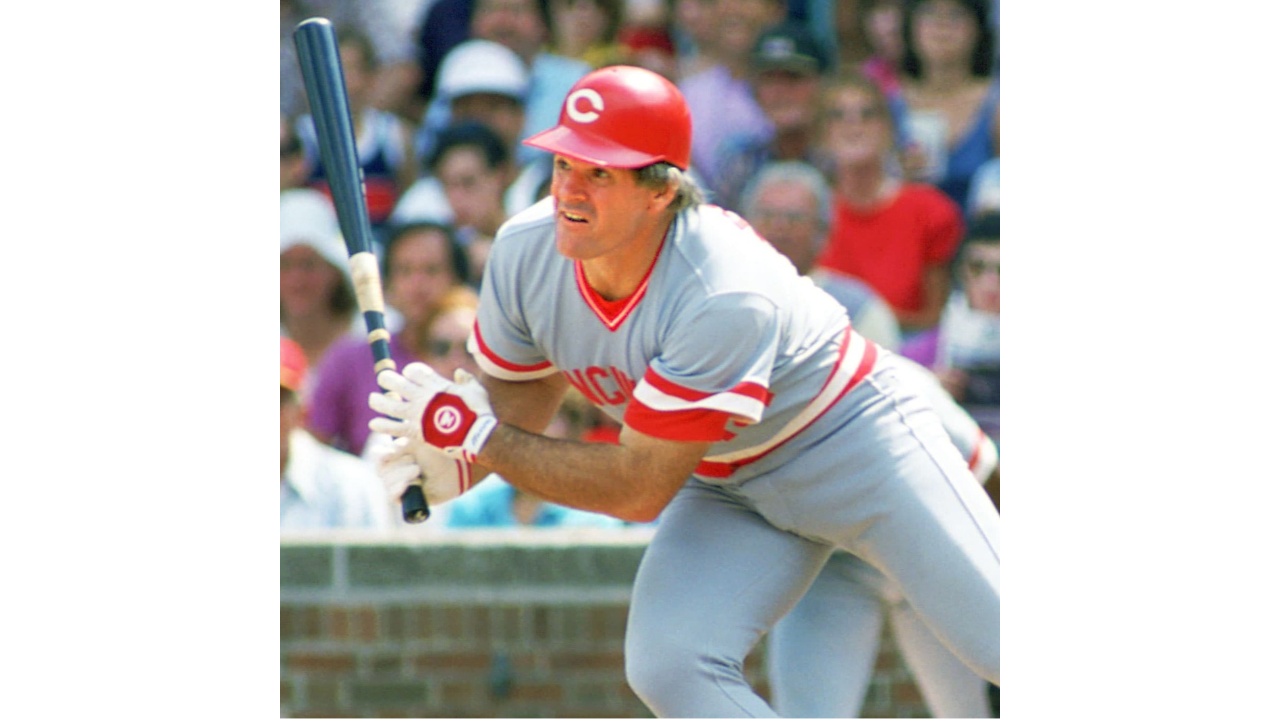
Pete Rose, Major League Baseball’s all-time hits leader with 4,256 career hits, returned to national headlines on November 19, 2026, when President Donald Trump announced a posthumous pardon for his federal tax conviction. The former Cincinnati Reds star, famously nicknamed Charlie Hustle, died on September 30, 2024, at age 83. His remarkable baseball achievements, decades-long gambling controversy and renewed Hall of Fame eligibility have made his legacy a major topic of discussion more than two years after his death.
Who Was Pete Rose?
Pete Rose was an American professional baseball player and manager, widely recognized as one of the most productive hitters in MLB history.
Born on April 14, 1941, in Cincinnati, Ohio, Rose developed a reputation for relentless effort and aggressive play.
His nickname, Charlie Hustle, reflected his habit of sprinting to first base, even after routine walks.
Rose spent 24 seasons in Major League Baseball, from 1963 to 1986, playing primarily for the Cincinnati Reds.
He also represented the Philadelphia Phillies and Montreal Expos.
His achievements established him among baseball’s greatest players, although his gambling-related suspension complicated his reputation.
Presidential Pardon
President Donald Trump announced a posthumous pardon for Pete Rose on November 19, 2026.
The decision concerned Rose’s 1990 federal conviction for filing false income tax returns.
Rose had pleaded guilty to two counts involving income that was not properly reported to federal tax authorities.
He subsequently served five months in federal prison.
The presidential action addressed his criminal conviction rather than the baseball gambling violations that resulted in his permanent MLB ban.
A presidential pardon does not automatically reverse MLB disciplinary decisions or guarantee Hall of Fame induction.
The announcement nevertheless renewed attention to Rose’s complicated legacy and his long-standing exclusion from baseball’s highest honor.
MLB Reinstatement
A separate development occurred in May 2025, when MLB Commissioner Rob Manfred changed how permanent ineligibility applies to deceased individuals.
Under the ruling, placement on baseball’s permanently ineligible list no longer continues after a person’s death.
The decision made Rose eligible for Hall of Fame consideration.
It also affected other deceased individuals who had previously been permanently excluded from baseball.
The ruling did not erase the historical findings concerning Rose’s gambling activities.
Instead, it removed a procedural barrier that had prevented his candidacy from being considered.
Hall of Fame Future
Pete Rose has not been inducted into the National Baseball Hall of Fame as of November 2026.
His restored eligibility means that his career can now be evaluated through the appropriate Hall of Fame selection process.
The Classic Baseball Era Committee provides a potential route for consideration, with the next relevant selection cycle expected to concern the 2028 induction class.
However, eligibility does not guarantee placement on a ballot or election.
Committee voters must consider Rose’s playing achievements alongside the circumstances surrounding his gambling ban.
His record-breaking statistics make his candidacy historically significant, while the controversy continues to raise questions about baseball’s standards for recognition.
Historic MLB Records
Pete Rose holds the MLB record for most career hits, with 4,256.
He surpassed Ty Cobb’s long-standing record in September 1985, becoming baseball’s all-time hits leader.
His remarkable consistency allowed him to accumulate records across more than two decades.
Rose’s major career statistics include:
- 4,256 hits, the MLB career record.
- 3,562 games played, the most in major league history.
- 14,053 at-bats, another MLB record.
- .303 career batting average.
- 2,165 runs scored.
- 746 doubles.
- 160 home runs and 1,314 RBIs.
His numbers reflect durability, consistent hitting and an exceptional ability to remain productive across different stages of his career.
Cincinnati Reds Career
Rose became closely associated with the Cincinnati Reds’ Big Red Machine, one of baseball’s most successful teams during the 1970s.
Playing alongside stars such as Johnny Bench, Joe Morgan and Tony Pérez, he helped establish Cincinnati as a dominant National League organization.
The Reds won consecutive World Series championships in 1975 and 1976.
Rose’s aggressive playing style and ability to reach base made him a central part of the team’s offense.
He later joined the Philadelphia Phillies, winning another World Series championship in 1980.
His three championship rings remain among the defining achievements of his playing career.
Awards and Achievements
Rose won the 1963 National League Rookie of the Year award, beginning a career filled with individual honors.
He received the 1973 National League Most Valuable Player award and was named 1975 World Series MVP.
Rose also won three National League batting titles in 1968, 1969 and 1973.
He earned two Gold Glove awards and made 17 All-Star appearances.
His versatility was another distinctive feature of his career.
Rose played extensively at first base, second base, third base, left field and right field.
Few players combined his longevity, defensive flexibility and offensive production.
Gambling Controversy
Rose’s reputation changed dramatically during his years as Cincinnati’s manager.
In 1989, an MLB investigation concluded that he had bet on baseball games, including games involving the Reds.
Betting on baseball while participating in the sport violated one of MLB’s most important integrity rules.
In August 1989, Rose agreed to permanent ineligibility from Major League Baseball.
He initially denied betting on baseball.
However, in his 2004 autobiography, he acknowledged that he had wagered on Reds games.
The admission confirmed a central allegation that had surrounded his career for years.
His suspension prevented him from participating in official MLB activities and blocked his Hall of Fame eligibility for decades.
Tax Conviction
Rose’s legal problems extended beyond baseball.
In 1990, he pleaded guilty to two federal counts of filing false income tax returns.
The case involved income from sources including autograph appearances, memorabilia and gambling winnings.
Rose received a prison sentence and served approximately five months in federal custody.
His conviction remained separate from MLB’s disciplinary process.
The November 2026 presidential pardon addressed this federal criminal matter, not the underlying baseball betting investigation.
That distinction remains important when examining the significance of the recent announcement.
Death and Cause
Pete Rose died on September 30, 2024, at his home in Las Vegas, Nevada, aged 83.
His death was attributed to heart disease, according to publicly reported medical findings.
Rose had remained a recognizable baseball personality long after his playing and managerial careers ended.
He frequently appeared at memorabilia events and continued interacting with fans.
His death prompted renewed discussion about his achievements, controversies and place in baseball history.
Legacy in 2026
Pete Rose remains MLB’s all-time hits leader, a three-time World Series champion and one of baseball’s most debated historical figures.
His career demonstrated extraordinary consistency, competitiveness and dedication to the game.
However, his admitted gambling on baseball created a lasting conflict between his sporting achievements and the rules governing professional competition.
The 2025 eligibility ruling and November 2026 presidential pardon have brought renewed attention to his legacy.
Neither development guarantees a place in Cooperstown, but both have changed the circumstances surrounding his historical recognition.
More than two years after his death, Charlie Hustle’s 4,256-hit record remains untouched, while the debate over his Hall of Fame future continues.
Clarify the Hall of Fame timelineTighten repeated career summaries