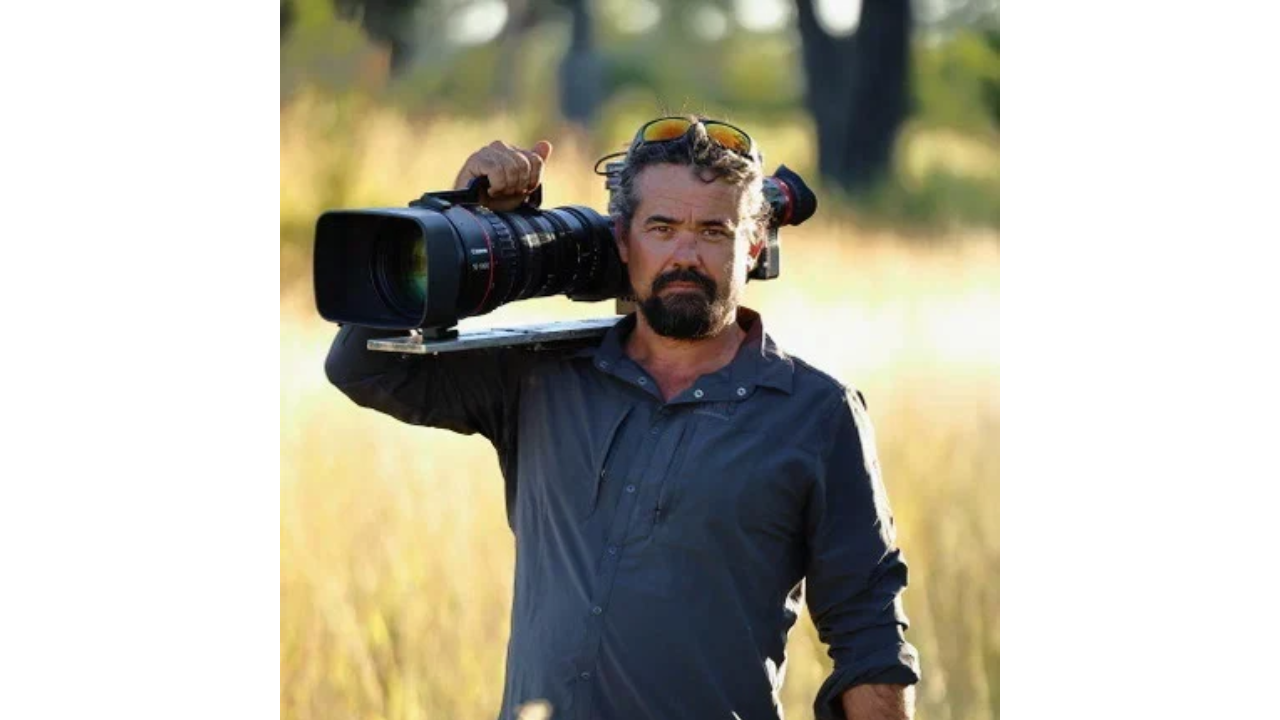
Brad Bestelink, the Emmy-nominated wildlife filmmaker, cinematographer, and conservationist from Botswana, died in early November 2026. Known for his extraordinary work documenting Africa’s wildlife, Bestelink built an international reputation through productions including Savage Kingdom, Living with Leopards, Planet Earth II, and Our Planet II. His death has prompted tributes from the wildlife filmmaking and conservation communities, particularly in Botswana, where he spent much of his life documenting the Okavango Delta.
Who Was Brad Bestelink?
Brad Bestelink was a Botswana-born wildlife cinematographer, director, producer, and conservation advocate whose career focused on the natural landscapes and animals of southern Africa.
He grew up in the Okavango Delta, one of Africa’s most important wildlife habitats. His upbringing gave him an understanding of animal behavior and the seasonal changes that shape the region.
Bestelink was described as a fourth-generation bushman, with family roots closely connected to the development of photographic safari tourism in Botswana.
Unlike filmmakers who traveled to Africa primarily for individual assignments, Bestelink had a lifelong relationship with the environment he filmed.
Early Life
Bestelink’s childhood was shaped by the waterways, grasslands, and wildlife of the Okavango Delta.
His family was involved in developing photographic, non-hunting tourism, an approach that allowed visitors to experience wildlife through observation rather than hunting.
He developed practical knowledge of the bush at an early age and reportedly became a professional safari guide at just 16.
Working as a guide helped him understand animal movements, predator behavior, and the challenges of navigating remote environments.
These experiences later became important to his career behind the camera, particularly when filming elusive predators.
Film Career
Bestelink developed his filmmaking skills through years of practical experience in the African wilderness.
He spent more than a decade learning alongside Dereck and Beverly Joubert, internationally recognized wildlife filmmakers known for documenting African ecosystems.
Their influence helped shape his approach to cinematography, combining detailed observation with compelling natural storytelling.
Bestelink eventually established himself as a cinematographer capable of recording difficult wildlife sequences in unpredictable conditions.
His work reached international audiences through productions distributed by major broadcasters and streaming platforms, including National Geographic, BBC, and Netflix.
Savage Kingdom
One of Bestelink’s notable projects was <em>Savage Kingdom</em>, a National Geographic wildlife series exploring the lives of predators in Botswana.
The production examined survival, territorial conflict, hunting, and competition among animals living in challenging environments.
Its dramatic storytelling and close observation of predators helped distinguish it from conventional wildlife programming.
Bestelink’s familiarity with the Okavango landscape was particularly valuable for filming animals whose movements could be difficult to predict.
Living With Leopards
<em>Living with Leopards</em>, released on Netflix in 2024, was another important project associated with Bestelink.
The documentary follows two leopard cubs as they face the challenges of growing up in the African wilderness.
Its central focus is the vulnerability of young predators and the difficult transition toward independence.
Capturing such behavior requires patience, field experience, and an understanding of how to observe animals without unnecessarily disturbing them.
The documentary brought the lives of African leopards to a global streaming audience.
Emmy Recognition
Bestelink received significant professional recognition for his contribution to <em>Our Planet II</em>, Netflix’s nature documentary series.
He earned a 2024 Primetime Emmy nomination for Outstanding Cinematography for a Nonfiction Program for work associated with the episode World on the Move.
The nomination recognized his contribution to wildlife filmmaking at an international level.
His credits also included work connected with the BBC’s <em>Planet Earth II</em>, particularly the Grasslands episode.
Other projects associated with his career included The Flood, Big Cats 24/7, Okavango: A Flood of Life, and Hippos: Africa’s River Giants.
NHFU Botswana
Beyond his work as a cinematographer, Bestelink helped establish the Natural History Film Unit Botswana (NHFU Botswana).
The company was developed to strengthen locally driven wildlife filmmaking and provide opportunities for Botswana’s own creative professionals.
Bestelink believed that people who lived close to Africa’s natural environments should have greater opportunities to document their stories.
He supported the development of local camera operators and filmmakers, helping build technical skills within the country’s production industry.
This commitment extended his influence beyond individual documentaries.
Conservation Work
Wildlife conservation was central to Bestelink’s professional identity.
His films highlighted the complexity of natural ecosystems and the pressures faced by animals in the wild.
Through close observation and detailed cinematography, he helped viewers understand predator relationships, habitat changes, and the importance of protecting natural landscapes.
The Okavango Delta remained particularly significant throughout his life.
His filmmaking demonstrated how powerful wildlife imagery could encourage public interest in conservation without losing sight of the animals’ natural behavior.
Artistic Interests
Bestelink’s creative interests extended beyond film production.
He was also an oil painter, producing artwork inspired by Botswana’s waterways and landscapes.
His paintings reflected the quieter side of the wilderness, particularly the atmosphere of the Okavango Panhandle.
While his cinematography documented movement and animal behavior, painting offered another way to express his connection with the natural environment.
Both forms of art reflected his lifelong attachment to Botswana’s wilderness.
Death and Tributes
Brad Bestelink’s death was reported in early November 2026, with tributes appearing across wildlife filmmaking and conservation communities.
Reports from regional publications, including Getaway and SA People, highlighted his professional achievements and commitment to supporting Botswana’s filmmakers.
His passing was also acknowledged by people associated with African wildlife documentaries.
A confirmed cause of death has not been established in the information available for this article. Details about his exact date of death and funeral arrangements should not be assumed without an official announcement.
Lasting Legacy
Brad Bestelink leaves behind a body of wildlife filmmaking that introduced international audiences to the extraordinary animals and landscapes of Botswana.
His contribution went beyond memorable cinematography. Through NHFU Botswana and his mentorship of local filmmakers, he worked to create opportunities for future generations of African storytellers.
His Emmy recognition, international documentary credits, conservation work, and artistic projects reflect a career built around a deep understanding of the natural world.
Bestelink’s lasting legacy lies in both the wildlife stories he captured and the Botswana filmmakers he helped develop. His work remains an important contribution to the visual documentation of Africa’s wilderness.