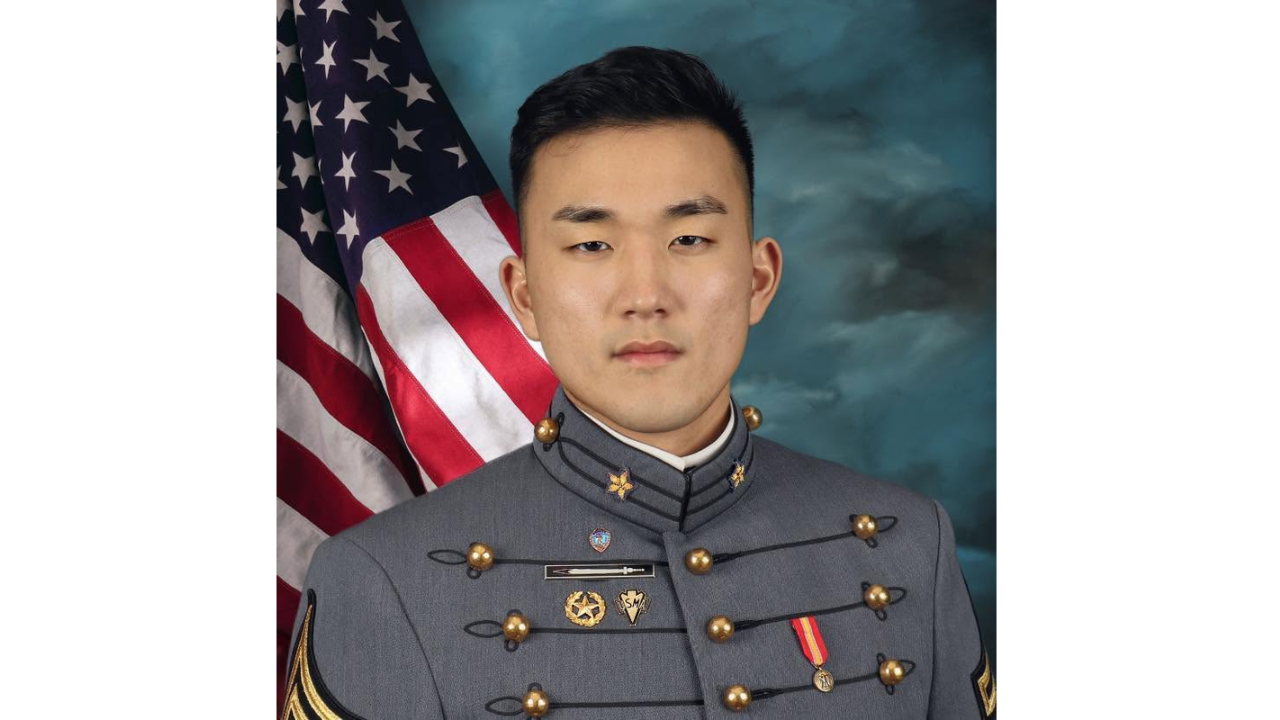
Caleb Suh, a former United States Military Academy cadet at West Point, pleaded guilty in June 2026 to a federal assault charge after admitting that he secretly drugged his pregnant girlfriend and administered abortion medication without her consent. The incident occurred in February 2022, but the case attracted renewed public attention after the woman filed a civil lawsuit on October 28, 2026. The lawsuit describes the physical and emotional consequences of the assault, while questions have emerged about Suh’s subsequent enrollment at Cornell and Columbia universities.
What Happened?
The incident began while Caleb Suh and his girlfriend were attending the United States Military Academy at West Point, New York.
According to court records described in news reports, the woman discovered she was pregnant in January 2022.
She wanted to continue the pregnancy, but Suh opposed her decision.
The disagreement reportedly became central to the events that followed.
On February 4, 2022, Suh visited his girlfriend’s barracks room carrying a drink he described as a prenatal protein shake.
However, the drink contained a sedative that the woman had not agreed to take.
After consuming it, she lost consciousness, leaving her unable to protect herself or consent to further medical intervention.
Drugged With Xanax
According to the criminal case and subsequent civil allegations, Suh secretly mixed Xanax into his girlfriend’s drink.
Xanax is a prescription medication containing alprazolam, a drug that can cause significant sedation.
Reports indicate that Suh obtained the medication from another person before preparing the drink.
He presented it as something intended to support his girlfriend during pregnancy.
Instead, the substance left her incapacitated.
The prosecution’s account established that the drugging was part of an assault involving the administration of abortion medication without her knowledge or consent.
Forced Abortion
While his girlfriend was unconscious, Suh administered abortion medication orally and vaginally without her consent, according to the reported court records.
Investigators also established that he had obtained the medication through an online pharmacy account created using the woman’s identity.
The civil complaint describes this as an intentional attempt to terminate a pregnancy that she had chosen to continue.
Because she was unconscious, she had no opportunity to understand what was happening or refuse the medication.
The incident involved a serious violation of her bodily autonomy and reproductive decision-making.
The criminal proceedings later resulted in Suh admitting guilt to a federal assault offense.
Medical Emergency
The woman reportedly regained consciousness while experiencing severe abdominal pain and heavy bleeding.
According to the lawsuit, she was physically incapacitated and required urgent medical assistance.
She contacted emergency services and was taken to a hospital, where she received treatment.
The pregnancy ended in a miscarriage following the incident.
The civil complaint also alleges that Suh left her alone during the medical emergency.
Another allegation concerns online questions he reportedly submitted to the pharmacy about whether medical professionals could identify the abortion medication.
Those details form part of the civil case and should be distinguished from the specific offense covered by his criminal guilty plea.
Guilty Plea
In June 2026, Caleb Suh pleaded guilty in Manhattan federal court to assault resulting in substantial bodily injury to a dating partner.
The plea marked a major development in the case, which concerned events that had occurred more than four years earlier.
His admission established criminal responsibility for the assault offense.
The legal proceedings also brought renewed attention to how the incident was handled during the years following his departure from West Point.
As of November 3, 2026, Suh’s sentencing was scheduled for January 2027.
No final sentence had been imposed at the time of the latest reports.
Civil Lawsuit
On October 28, 2026, the woman filed a separate civil lawsuit using the pseudonym Jane Doe to protect her identity.
The complaint seeks unspecified financial damages and includes claims involving assault, battery, and intentional infliction of emotional distress.
It describes the physical injuries, psychological suffering, and lasting consequences allegedly resulting from Suh’s actions.
Unlike the criminal prosecution, which addresses violations of federal law, the civil case seeks legal remedies for harm suffered by the plaintiff.
The lawsuit remains a separate proceeding, and its allegations have not all been independently adjudicated.
Cornell Enrollment
Another significant development concerns Suh’s education after leaving West Point.
Following the incident, he transferred to Cornell University, an Ivy League institution in New York.
He subsequently completed his studies there, reportedly graduating in May 2026.
According to statements attributed to Cornell officials, the university received information indicating that Suh had left West Point in good standing.
The records reportedly did not identify disciplinary action that would have alerted Cornell to the circumstances later described in the criminal proceedings.
This disclosure raised questions about how universities receive and evaluate disciplinary information concerning transfer students.
However, the available reporting does not establish that Cornell knowingly admitted someone whose criminal conduct had already been disclosed to its admissions officials.
Columbia Admission
After graduating from Cornell, Suh enrolled in a master’s program in public health at Columbia University in September 2026.
His enrollment attracted scrutiny because it occurred after his June guilty plea.
According to media reports, Columbia officials were not aware of the criminal case until journalists sought comment in late October.
The university subsequently took action concerning his status, although the specific measures were not publicly detailed in the reports cited.
The situation prompted broader questions about institutional background checks, disclosure requirements, and the information available to graduate admissions offices.
Reports also indicated that Suh’s sentencing had been postponed until January 2027, allowing him to complete the autumn academic semester.
University Questions
The case has generated discussion about the responsibilities of educational institutions when serious misconduct involves a student.
West Point, Cornell, and Columbia each became part of the public conversation because of Suh’s academic history.
One central issue is whether universities have adequate systems for sharing relevant disciplinary information while respecting applicable privacy laws and procedural protections.
Another concerns the difference between an institution’s knowledge at the time of admission and information that becomes available afterward.
The public reporting raises these questions but does not, by itself, establish wrongdoing by every institution involved.
Latest Update
As of November 3, 2026, the case had reached two important legal stages.
Suh had pleaded guilty to the federal assault charge, with sentencing scheduled for January 2027.
Meanwhile, the woman had initiated civil proceedings seeking damages for the harm described in her complaint.
The lawsuit’s publication brought additional attention to the original assault, Suh’s subsequent education, and the circumstances surrounding his admission to prestigious universities.
The victim’s identity remains protected in public reporting through the name Jane Doe.
Final Word
The Caleb Suh case involves a former West Point cadet who admitted to a serious assault against his pregnant girlfriend after administering medication without her consent.
The February 2022 incident resulted in a medical emergency and pregnancy loss, while the criminal case concluded with a guilty plea in June 2026.
The civil lawsuit filed in October 2026 has placed renewed attention on the woman’s experience and the years that followed.
With sentencing scheduled for January 2027 and civil litigation ongoing, the legal consequences of the case have not yet been fully resolved.