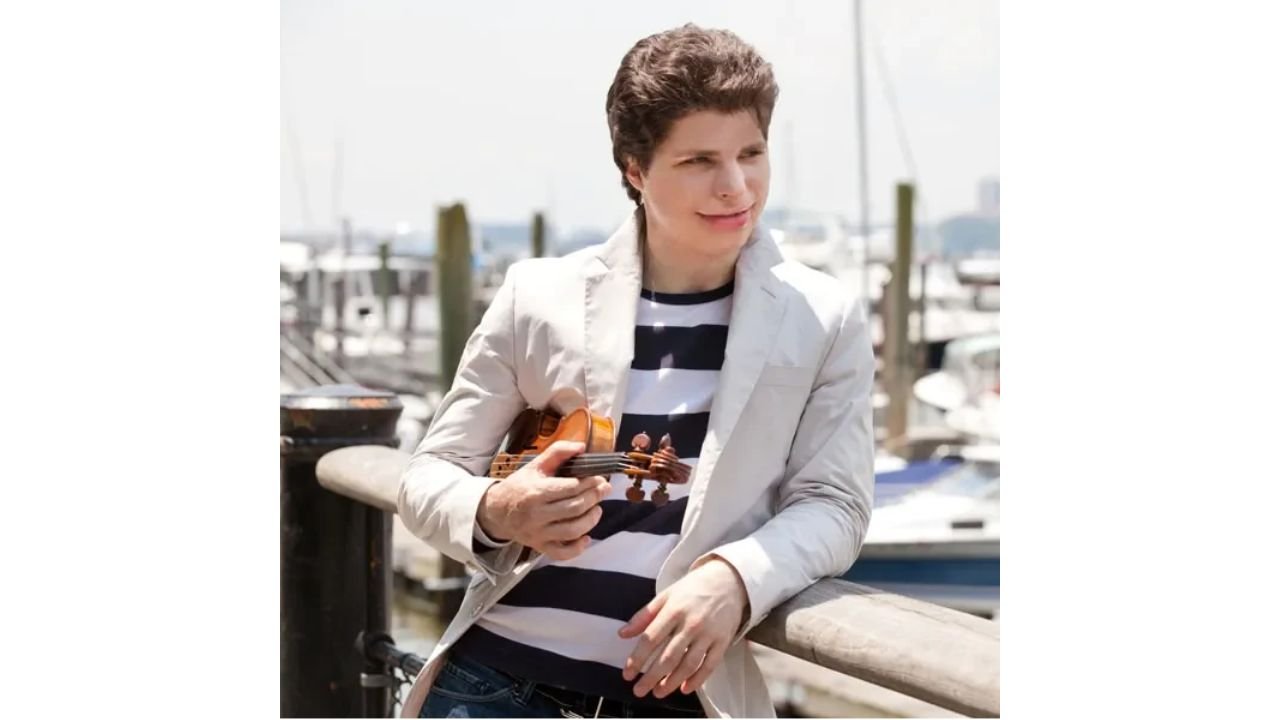
Augustin Hadelich suffered severe burns in a fire at his family’s farm in Italy in 1999, when he was 15. The accident interrupted his musical training and required a long recovery, but he eventually returned to performing. His later achievements include the 2006 Indianapolis competition gold medal and a 2016 Grammy. His active 2026 concert schedule concerns his continuing career, rather than a newly reported accident.
What Happened to Augustin Hadelich?
The incident most often discussed in accounts of Hadelich’s life was a fire during his teenage years. He was growing up in Tuscany, where his German parents had established their family home. The injuries affected his upper body and his right hand, making the consequences especially serious for someone already developing as a violinist.
Contemporary profiles describe cancelled engagements, reconstructive operations and uncertainty about his future. This was a burn injury from a fire, not a car crash. Descriptions of an explosion or a precise technical cause should be treated cautiously unless supported by a firsthand account. The established facts are the year, the family farm and the severe injuries.
His Musical Life Before the Fire
Hadelich was born in Italy in 1984 and began learning the violin as a young child. His early education combined life in rural Tuscany with lessons and musical opportunities beyond his immediate surroundings. He had already performed with orchestras before the accident, so the interruption affected an established childhood ambition.
In an interview with Strings magazine, he recalled journeys to Germany for lessons and early experiences playing concertos. These performances gave him practical experience of working with conductors and orchestras. His background helps explain what was at stake in 1999: returning to music meant recovering an important part of everyday life as well as a possible profession.
Treatment and Time Away From Performing
Recovery was a process measured in months rather than a quick return after a short hospital stay. Reports describe treatment in Germany and multiple reconstructive procedures. The physical consequences required him to put concert plans aside while concentrating on getting better.
Hadelich told Strings that he did not touch the violin for about six months and did not give another concert for approximately a year and a half. Those are his retrospective estimates, rather than a detailed medical timetable. His own account emphasizes physical recovery and the gradual return of ambition. There is no need to invent additional diagnoses or surgery counts to explain the seriousness of the experience.
How He Returned to the Violin
When Hadelich resumed playing, he discovered that the instrument did not feel fundamentally different to him. That was encouraging, although rebuilding strength and preparing for performance still took time. The return was both a practical task and a decision about how he wanted to spend his life.
He has explained that the accident made the importance of music clearer to him. That does not mean the fire created his talent; his musical development had begun years earlier. It changed the circumstances in which he pursued it. His subsequent career rests on training, preparation and artistic choices as well as the determination needed during recovery.
Juilliard and the Indianapolis Breakthrough
Hadelich later studied at The Juilliard School in New York with Joel Smirnoff. Moving into advanced training gave him a new setting in which to develop after the disruption of his teenage years. He went on to win the International Violin Competition of Indianapolis in 2006.
That result became an important professional turning point. Competition success brought greater visibility and opportunities to appear with leading ensembles. His story is therefore more than an account of returning to the same position he held before the fire. He progressed from a young performer recovering from injury into a soloist with an international career and an expanding repertoire.
Awards, Recordings and Teaching
In 2016, Hadelich won a Grammy for his recording of Henri Dutilleux’s violin concerto, L’Arbre des songes, with the Seattle Symphony under Ludovic Morlot. His recordings also explore Bach, Paganini, Brahms, Ligeti and other composers, reflecting musical interests extending well beyond a single competition programme.
The National Arts Centre’s biography identifies him as a Yale School of Music faculty member since 2021. It also records his American Roadtrip collaboration with pianist Orion Weiss and its 2025 Opus Klassik recognition. These milestones provide concrete evidence of his work after recovery. They are more useful than reducing every performance to a retelling of the childhood accident.
The Latest Verified Career Updates
Hadelich’s management biography for the 2026–27 season lists him as an artistic partner of the Mahler Chamber Orchestra from February 2026. It also describes his role as artiste étoile at the Lucerne Festival and residencies connected with Hamburg and Vienna. These are documented professional developments, rather than claims of a new emergency.
His official calendar lists Leipzig on November 8, Hamburg on November 9 and Vienna on November 11, 2026. A listed engagement establishes scheduling, not independent proof that a concert has already taken place. Future projects, including a Mozart cycle beginning in January 2027, should likewise be described as planned activities.
Why the Accident Still Draws Attention
Readers often discover the fire while learning about Hadelich’s background or noticing the visible effects of his injuries. His public interviews provide an explanation without requiring speculation about his present health. The lasting point is that the documented accident happened in 1999, followed by recovery and a sustained return to music.
His present reputation comes from the sound, technique and interpretations he brings to the violin. The fire remains an important part of his history, but his recordings, teaching and current engagements show the much larger career that followed it.