
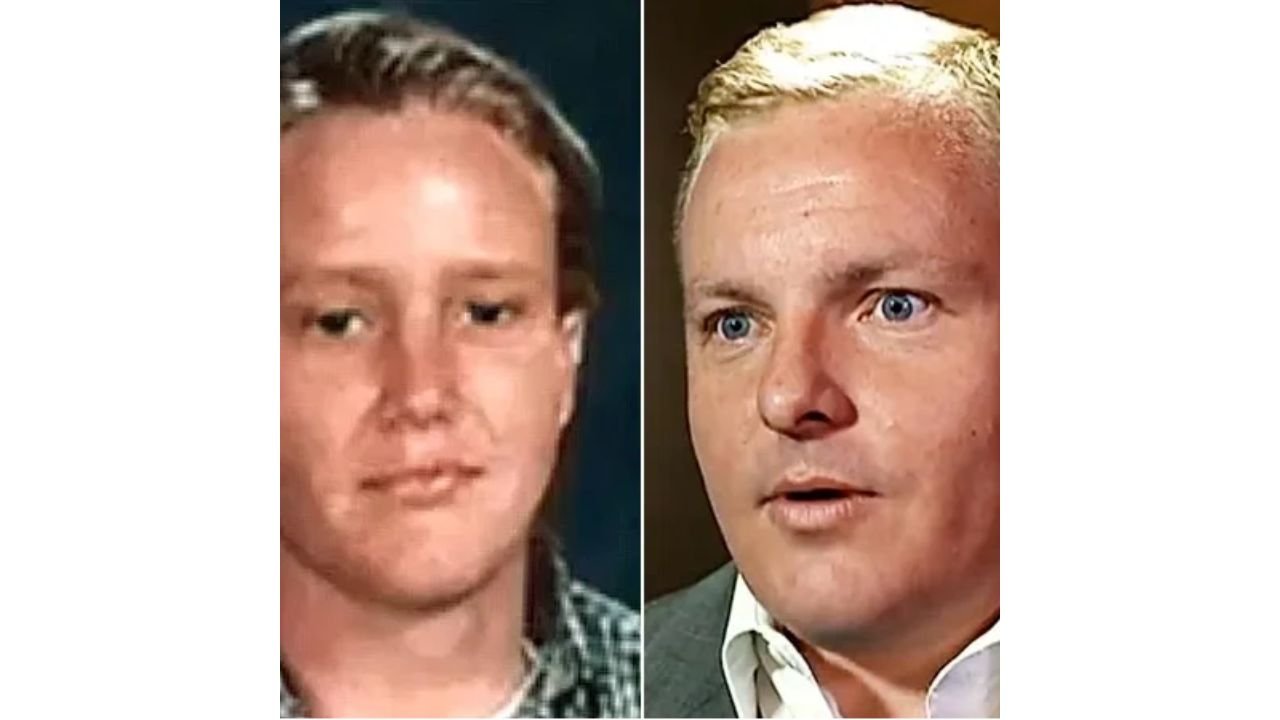
Steven Carter was the missing baby Marx Panama Moriarty Barnes, whose identity was confirmed through DNA testing in 2011. Adopted in Hawaii at four, he grew up unaware that his biological family had been searching for him. An age-progressed image on a missing children’s website prompted him to contact police. His story became widely known in 2012 and was revisited by A&E in an account updated in July 2026.
Who Is Steven Carter?
Steven, also known as Steve Carter, was working in medical software and living in the Philadelphia area when the discovery became public. He knew that he had been adopted, but did not know that his early life was connected to an unresolved missing-child case in Hawaii.
His adopted identity and his birth identity had remained separate for decades. The eventual connection did not mean he had spent those years hiding or living under an identity he knew was false. He was an adult discovering information about himself, while relatives were learning that the infant they had lost had survived and grown up.
The Disappearance in Hawaii
Carter’s birth parents were Mark Barnes and Charlotte Moriarty. In 1977, Moriarty left with their infant son and did not return to Barnes. The child was approximately six months old. Barnes reported them missing, but the investigation did not reconnect him with the baby who subsequently entered state care.
Accounts published in 2012 describe a period in which authorities encountered a woman with the infant and received inaccurate identifying information. Reports give the child’s temporary name in differing spellings, including Tenzin Amey and Tenzin Amea. The spelling variations matter less than the underlying problem: officials did not successfully match the child in their custody to the family searching for him.
Why His Records Did Not Match
ABC News reported that the name supplied to authorities differed from the child’s birth name, and his recorded birthday was one day away from the date Carter later knew. Other reporting described an inaccurate account of his father’s background. Those discrepancies complicated the search.
However, the precise chain of events should not be presented as fully settled. CNN noted in 2012 that it could not independently confirm every detail about who placed him in care. In his later A&E interview, Carter also acknowledged uncertainty about the woman involved. The DNA-confirmed identity is established; every explanation for the original administrative failure is not.
His Adoption and Childhood
Carter remained in care before being adopted at age four. He then grew up on the American mainland with a family who had not known that his birth relatives were looking for him. He spoke warmly about his upbringing when interviewed after the discovery.
He did not describe a childhood spent feeling that he belonged somewhere else. In CNN’s 2012 interview, he explained that he had always known about the adoption and considered his adoptive parents loving and supportive. Questions about his paperwork and biological background developed alongside that secure family relationship. Finding his birth identity added another part of his history rather than erasing the family who raised him.
The Image That Started the Breakthrough
A news report about Carlina White, who identified herself as a child taken from a hospital, encouraged Carter to investigate his own background. He searched the National Center for Missing & Exploited Children’s material using details connected with Hawaii and the number of years that had passed.
He encountered an age-progressed image based on an infant photograph and thought the adult face resembled his own. He shared it with friends and family before approaching Honolulu police. Older reports differ slightly about when his browsing began, but the central sequence is consistent: recognition of the image led to contact with investigators and then a formal identity test.
DNA Confirmation in 2011
A resemblance was a lead, not the final answer. Carter provided a DNA sample, and the resulting comparison confirmed that he was Marx Panama Moriarty Barnes. CNN’s reporting placed the test in February 2011 and the confirmation later that year, following months of waiting.
In his own televised account, Carter said he had known the result since approximately October 2011. That explains why articles published in April 2012 described the discovery as recent even though testing had already happened. The case was not first solved in 2026. Later publication dates refer to renewed coverage of an older identification.
Contact With His Biological Family
Carter took time to absorb the result before contacting his biological father and half sister. He told CNN that the first conversations included pauses and difficult emotions, as both sides tried to understand the years they had missed. He preferred a gradual process rather than an immediate public reunion.
Reports described his father living in California at that time. That location belongs to the historical reporting and should not be treated as a current residential update. Carter’s willingness to speak about the discovery did not amount to an invitation for strangers to investigate his relatives or turn their private conversations into entertainment.
What the 2026 Update Adds
A&E’s account, updated on July 27, 2026, included Carter’s reflections on the identification and comments from NCMEC’s family advocacy leadership. It emphasized the practical and emotional support involved in reconnecting people after a long separation. Carter also discussed why he initially wanted the story kept private.
The later interview revisited gaps in his early history rather than announcing a new disappearance. His mother’s whereabouts remained unresolved in the accounts reviewed. Her circumstances should therefore be described with attribution and uncertainty, without inventing a death, arrest or reunion. The confirmed outcome remains that the child once listed as missing was identified as the adult Steve Carter.